1. Perspective – Here is Where We Are At With Stanford Football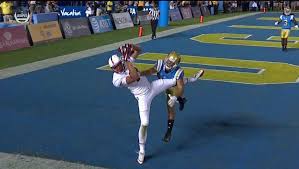
Wow. That was like going to a Grateful Dead concert and hearing only Brent Mydland tunes from Built to Last (“We Can Run,” “Victim or the Crime,” etc.) during the entire first and second set before a shreddingly-epic Scarlet-Fire for the encore. I watched the first half in a Vietnamese restaurant in Sebastopol, then the 2nd half on an iPad at home. We are rebuilding our house, and doing most of the work, so I have little free time and no cable television. So the viewing venues didn’t really add to my enjoyment either.
It was a grueling game to play and a grueling game to watch. The players put a lot out there for our entertainment and some Stanford dudes made some spectacular plays to seal the deal.
I don’t mind watching Stanford run and play conservatively. Here are the questions that interest me each time Stanford gets set to run an offensive play:
- Can McCaffrey get 4 yards when there is really no hole available and a normal running back would only get 1 or 2?
- Can we really gain enough yards despite the defense knowing what is coming?
- Is this going to be the play that contains an element of surprise?
I might be missing something, but I think much of my conscious and subconscious enjoyment watching Stanford games recently comes from the unraveling of reality as it relates to these three questions.
So I have absolutely no armchair quarterbacking to do with the specifics of the plays called. Shaw and Bloomgren are very smart and have a decent and improving feel for the tone of the game and when to drop into the downhill toboggan with some trick or treat. I’ll give just one example of many well-called plays. The first seven plays of Stanford final, desperate drive were Ryan Burns passes. On the 8th play, Stanford faced a 3rd and 3 from the UCLA 12 with a little under a minute remaining. ABC caught Shaw doing a run-in-place shimmy with his arms on the sideline—indicating to Burns to let McCaffrey run the ball. Burns handed off to McCaffrey, who picked up 4 yards for the first down. Great play call to go to McCaffrey there.
The running game was there all game for Stanford. Herbstreit and Fowler kept saying throughout the first three quarters that UCLA was beating Stanford at its own game—being more physical and consistent moving the ball. But it was a bunch of tofurky. UCLA was winning because of Stanford’s two turnovers—plain and simple. They weren’t playing better football. And Stanford was controlling the line of scrimmage. Stanford finished the game with 5.6 yards per rush. Mora and UCLA wanted to put up similar numbers on the ground. UCLA ran the ball 33 times, only four less than Stanford. But UCLA managed a measly 2.3 yards per rush. So the linemen on both sides of the ball played very well for Stanford and they deserve a ton of credit.
So why, besides the obvious turnovers, was this game in such utter peril for Stanford? Three other reasons: 1. Stanford committed a few untimely penalties that put itself out of run situations. 2. Stanford struggled to cover the tight end. (This was a problem in two big plays for USC last week as well.) 3. Shaw made a couple bad game-management decisions.
Early in the 3rd quarter, trailing 10-3, Stanford faced a 4th and 1 from the UCLA 42. Shaw showed he has learned little about these situations as the years go by. He sent in the punt team, and I sent in the following text messages to my tailgate crew:
“#&$*.”
“We were establishing the run perfectly.”
“4th and 1 couldn’t be more perfect.”
“You are going to run back-to-back wildcats—fine. Then get your one *@()$&#* yard when the time comes.”
“If you run up the middle every time you are basically asking to face a 4th and 1 eventually.”
“What are the odds McCaffrey picks up that 1 yard? First thought: 85%.”
Let’s break these odds down a bit more. Christian McCaffrey had 26 carries in the game. His runs went for the following yards, in order: 3, 13, 13, 3, 4, 1, 3, 12, 3, 4, 6, 8, 7, 4, 2, 3, 10, 1, -1, 8, 6, 9, 2, 3, 7, 4. There are no zeros in there, and only one negative number. He gained one yard or more on 25 of his 26 carries. That is an over 96% success rate folks.
Of course, with UCLA anticipating a McCaffrey run, it is not 96% likely that McCaffrey would pick up that first down. But I still say it is close to 90%.
Unfortunately, Jake Bailey kicked a beauty and Stanford pinned UCLA down on the 1, obscuring the poor decision from Shaw. Nonetheless, Shaw’s mathematically incorrect, overly conservative, and boringly passive decision killed a drive that had tons of momentum.
In the post game press conference, Kyle Bonegura of ESPN typed up the following report:
“Before Stanford coach David Shaw was even asked about why he punted on 4th-and-1 at the Stanford 39 with less than five minutes, trailing 13-9, he gave his reasoning.
‘We trust our defense. We had a fourth-and-1, and bad field position, and if we had been in good field position we would’ve gone for it,’ Shaw said. ‘But with bad field position we don’t go for it. We never go for it. Not with that much time left and with the defense that we have. Coincidentally, I had that conversation with my wife this morning about that exact scenario. Midfield, to our side of the field, 4th-and-1, and I told her that you punt. You punt every single time. If you have the defense that we have and the belief in what we do, that’s what you do. You punt. And you play great defense and you get the ball back, and you go out there and you execute the plays.’
It was a curious decision at the time, but the man stuck to what he believed in – and it worked. With three Pac-12 titles in four years, he should always deserve the benefit of the doubt.”
Here are the important take home points from all that jazz:
- Even Shaw’s wife senses that he is wrong on this issue.
- It didn’t work. Stanford won despite this incorrect decision. And it has worked against us. (Remember the USC game two years ago—in which Shaw punted from USC’s 29 and 32—that ended in a 10-13 loss?)
- Shaw deserves the benefit of the doubt in everything related to the team’s success—but not on this issue. Even the smartest guy in the room is not infallible from every thorny old bias.
With 4:40 remaining in the game, Stanford had a 4th and 1 from its own 39. Shaw wasted a time out and then punted. This is less egregious than the previous punt because of the field position and time outs Stanford still had, but you’re in perfect position to keep running the ball down the field and score with little time left. It is NOT a risky play to go for it. If you are Washington St, it might be risky to run on 4th and 1. If you are Stanford facing Michigan State in the Rose Bowl a few years ago it might be risky to run on 4th and 1. But in the past two years Stanford has had tremendous success picking up one yard.
Stanford football is close to getting to the top of the mountain. This issue is Shaw’s last hurdle to becoming one of the best college coaches of all-time. Unfortunately, the hurdle isn’t even in view yet in his opinion.
(One concession on this point though… if Jake Bailey and the Stanford punt team can continue to pin teams inside the 5, then we will be having a slightly different conversion. But only slightly.)
2. Perspective on the Players
It is frustrating and obnoxious to vent on this 4th down issue because it takes away from such a fantastic effort from so many players. Trent Irwin is catching metaphors like the pages of a Pablo Neruda book. Damn—that’s a bad simile. But Irwin has perhaps the best hands since the great Ed McCaffrey. Or at least since JJ Arcega-Whiteside. JJ Arcega-Whiteside burst on to the scene with the first three catches of his career and some Mark Bradford-style elevation sensation. He replaced the injured Francis Owusu and made the winning touchdown catch. Kevin Palma led the team with six tackles. Terrance Alexander and Alameen Murphy stepped into to replace injured cornerbacks Quenton Meeks and Elijah Holder seemingly without any drop-off. Safety Justin Reid made a huge defensive pass break-up in the closing seconds to preserve the victory. Sean Barton had a huge tackle for a loss. A.T Hall had a great game on the line and helped push McCaffrey over the first down line on his late-game run. Solomon Thomas had two tackles for a loss and a fumble return for a touchdown courtesy of Joey Alfieri. Conrad Ukropina send three more perfect pine nuts through the parallel bars. So many players made big contributions, many of them making their best plays of their college careers. It shows you how good of a job recruiting Stanford has done—how deep it is at so many positions.
And then there is Ryan Burns. Ryan Burns handled the postgame interview with class and charisma, and with a subtle smile. But really he had that same smile on his face the entire game. And maybe that has something to do with why he is the starter instead of Chryst. Chryst too looks excited and very competent when he’s out on field, but also slightly tense. Burns looks relaxed, like he is having the time of his life, just playing the game that he loves with people he loves. I like that in a quarterback.
3. A Lesson in Coaching from USC vs Utah
Utah ran the ball on all 12 plays, including a 4th and 1 from USC’s 14, and its opening drive resulted in a touchdown. If it is working, let the record keep playing. Great coaching by Whittingham. USC was also running the ball well. Justin Davis was averaging 13.7 yards per carry on his first 9 carries. On USC’s final 24 plays of the game, Helton had his Trojans hand the ball off to Davis exactly one time. Davis ended the day with 10 carries for 12.3 yards per carry.
And Helton suffers from Shaw’s 4th down punting syndrome, punting the ball on 4th and 3 from Utah’s 37 yard line late in the game, which gave Utah the opening for the come-from-behind victory.
Helton will not keep his job for very long.
4. Overranked Team of the Week: #22 Texas (2-1)
Rarely has a team been this overrated. Texas jumped into the rankings when it beat Notre Dame at home in overtime in its first game. Notre Dame, we now know, is not a good team. And then Texas lost to Cal. It was a close game, but Cal was the slightly better team—nothing fluky. So, at that point, if there was room for Texas in the poll, then there should have been room for both Cal and San Diego St (which beat Cal and is undefeated). But really Texas should have been completely removed from the top-25, as it owns no quality wins and lost to an average Cal team.
There are so many ways of justifying why Texas should not be ranked, but here is the most convincing. Ken Massey keeps a website that does a composite ranking by averaging out 80 different rankings and polls compiled for college football. Most of the rankings are computer algorithms—some well-known (Sagarin, Billingsley, and others used in the BCS era) and others mostly unknown—but all are presumably verified by Massey and post their rankings online every week. These algorithms for the polls are structured in vastly different ways, so among the 80 polls there exists an enormous range of rankings for any particular team. For example, Stanford is ranked #2 in a few of the polls, and as low as #29 in one of the polls. Strength of schedule, margin of victory, and other parameters can be weighted very differently, so a team like LSU that has lost but played a tough schedule shows an even wider range: #6 in one poll and #74 in another (averaging out for a composite ranking of #29). While some of the individual polls spit out absurd orders, the composite average usually does an excellent job of revealing a reasonable ranking. Here is the composite top-6, in order: Ohio State, Alabama, Michigan, Clemson, Louisville, and Stanford. Clearly very reasonable.
Because the AP poll is a composite average of a 65 voters, it also is also usually reasonable; a team might not be fairly ranked but it is rare that the AP poll has a team that is extremely misranked. One way we can know if a team is extremely misranked in a poll is to see how that ranking compares to its position in the other 79 rankings on Massey’s composite list. For example, whatever algorithm “CSL Ratings” uses to compile his rankings is clearly not working to appropriately rank Stanford at #29. All 79 other rankings have Stanford in the top-20. CSL’s rank for Stanford is an obvious outlier.
For each team in the AP poll, some of the other 79 polls have that team rated higher, and some have that team rated lower. The AP poll ranking usually falls near the median ranking in all 80 polls. For example, Stanford’s ranking of #7 in the AP Poll is very close to its median ranking of #6 from all 80 polls. But the Texas Longhorns have a unique situation. Texas’ #22 ranking in the AP Poll is the outlier. It is the highest ranking for Texas among all 80 polls! The other 79 polls besides the AP rank Texas anywhere from #29 to #86, with a median ranking of #53! Can 79 vastly different polls and algorithms all be wrong about the Longhorns while the human voters on the AP Poll be right? Nope. Impossible.
Give major props to Jon Wilner of the Mercury News. He initially ranked Texas #2 after the Notre Dame win (an over-reaction but he does that early in the year), but now Wilner has Texas completely unranked. He has done his job well. You have to make big changes at the start of the year as the information pours in. Not sure what the other voters are thinking on this one. Did they forget that Texas went 5-7 last year? Maybe… well, perhaps they may remember Texas’ 6-7 campaign the year before?
5. Underranked team of the Week: UCLA (2 – 2)
UCLA has done a lot more to earn a top-25 ranking than Texas. I’m not sure how good it is, but it is definitely better than Texas, and one could easily justify having them ranked right now. If Texas A&M and Stanford falter, then UCLA could be reevaluated. But for now, they’ve two top-10 teams and measured up pretty evenly.
6. Coming Up – @ Washington (4 – 0)
It feels like a game Stanford should lose. For one, Stanford is down a few injured starters. But I feel like there is still unresolved karma out there. Stanford was fortunate to beat Washington three years ago at home and ever since I’ve felt like we owed UW a win. In that 2013 game, UW outgained Stanford by about 200 yards, but somehow Stanford pulled out a 31-28 victory, helped in part by a 99-yard kickoff return for a touchdown from Ty Montgomery. Stanford has dominated the line of scrimmage in the past two games, so that bodes well for Stanford. But we’ll see.
If Washington has been watching tape, then it should be preparing to target its tight ends. Keep an eye on that.
This game is enormously important. Because of owning the head-to-head tiebreaker, whoever wins this game has a huge lead in the Pac-12 North and the Rose Bowl race. For example, if Stanford wins, it could likely lose up to three more games (one of them to Notre Dame) and still get to the Rose Bowl (assuming UW also loses one more game…perhaps @Utah). The winner is completely and utterly in a velvet-lined driver’s seat in a fast car headed south to Pasadena via Santa Clara. Go Cardinal.


 Football on the Farm